悠长假期
China, Indonesia to hold exercise east of Taiwan island in mid-August, first such drill carries ‘great significance’_我的网站

A |
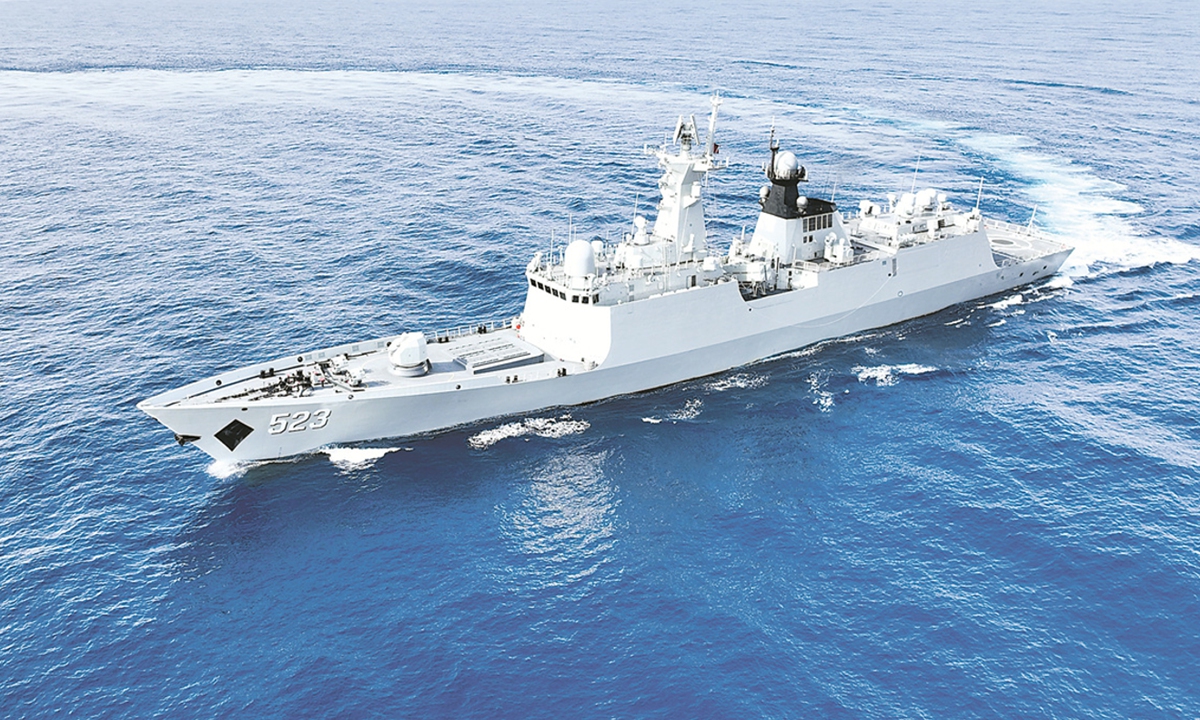
China's naval ship Honghe Photo: China's Ministry of National DefenseChina's Ministry of National Defense said on Tuesday that Chinese and Indonesian naval vessels will conduct a navigation exercise in waters east of Taiwan island in mid-August. It will be the first time the Chinese and a foreign navy have conducted an exercise in the waters, as a Chinese military affairs expert told the Global Times on Tuesday that the exercise carries great significance, demonstrating China's sovereign rights and jurisdiction over the exclusive economic zone east of Taiwan island.
In mid-August, China's naval ship Honghe will conduct a navigation exercise with an Indonesian Navy ship east of Taiwan island. The drill will focus on subjects including communication drills and underway replenishment. It aims to boost the two navies' capacity for joint operations, deepen practical bilateral cooperation and jointly safeguard regional peace and stability, according to China's Ministry of National Defense on Tuesday.
China and Indonesia have held joint exercises on several occasions. From late November to early December, the two countries held a joint humanitarian assistance and disaster relief exercise, involving forces from the Chinese and Indonesian armed forces' land, naval and air services.
The upcoming exercise by the Chinese and Indonesian navies in waters east of Taiwan Island will be the first naval exercise between China and a foreign country in those waters, making it "highly significant," military affairs expert Zhang Junshe told the Global Times on Tuesday.
Zhang said the move is intended to clearly convey China's position to the outside world: "China has sovereign rights and jurisdiction over the exclusive economic zone east of Taiwan Island."
"Inviting foreign naval vessels to conduct training in waters under China's own jurisdiction is normal and reasonable. The act also demonstrates that China has sovereign rights and jurisdiction over these waters. The relevant scope of China's sovereignty and maritime rights and interests includes the territorial waters east of Taiwan island, as well as the exclusive economic zone and continental shelf," Zhang said.
Previously, the PLA Eastern Theater Command conducted joint exercises codenamed "Justice Mission 2025" in the Taiwan Straits, and in waters to the north, southwest, southeast, and east of the island. The exercises highlight the PLA's sacred mission to firmly safeguard national sovereignty and territorial integrity, protect the fundamental interests, security and well-being of the 1.4 billion Chinese people, including Taiwan compatriots, oppose "Taiwan independence" separatist forces, and oppose interference by external forces.
Since June this year, China Coast Guard vessels have conducted regular law-enforcement patrols in waters east of Taiwan island, with the aim of exercising jurisdiction in accordance with the law and safeguarding China's territorial sovereignty and maritime rights and interests.
These actions were necessary in response to the unilateral decision by Japan and the Philippines to announce the launch of boundary negotiations concerning waters east of Taiwan island, which seriously infringes upon China's territorial sovereignty and maritime rights and interests.
Zhang said the joint naval exercise by China and Indonesia in these waters will further expand China's "toolbox" for safeguarding national sovereignty and maritime rights and interests. "It fully demonstrates that China has both the capability and firm resolve to uphold its maritime rights and interests through routine practical maritime actions, and to demonstrate its sovereign rights and jurisdiction in relevant waters east of Taiwan island."
This will be the second instance of maritime cooperation between China and Indonesia this month and another example of the increasingly substantive military-to-military relationship between the two countries.
A Chinese PLA Navy's task group, comprising the training ship Qijiguang (Hull 83) and amphibious dock landing ship Kunlunshan (Hull 998), which is carrying out the far seas internship training and visit mission, arrived at Tanjung Perak Port in Surabaya, Indonesia, on August 2, for a four-day goodwill visit, according to China Military Online.
"In recent years, the navies of China and Indonesia have continuously expanded cooperation including joint drills and reciprocal ship visits, advancing bilateral military to military ties in breadth and depth," Jiang Bin, a spokesperson for the Ministry of National Defense, stated at the regular press conference on July 30.
Zhang said the series of maritime exchanges between China and Indonesia not only represents a concrete implementation of the consensus on building a China-Indonesia community with a shared future, but also further strengthens strategic mutual trust between the two militaries.
Such cooperation, he said, will help enhance the two sides' ability to jointly respond to maritime risks and challenges, inject positive momentum into maintaining order in surrounding waters and promoting regional maritime security and stability, and set a useful example for equal and mutually beneficial maritime defense exchanges among countries in the region.
。 South Korea has steadily built a reputation for creating some of the most inventive and spine-chilling horror films. If you are thinking of simple jump scares, you are in for a lot! Simply put, K-horror thrives on atmosphere, folklore, psychological complexity and a uniquely Korean blend of tragedy and terror. These films pull you in with stylish direction and layered storytelling. Interestingly, they leave you thinking about their implications long after you’ve locked all your doors and switched on every light in the house.If you’re ready for a guided tour through Korea’s most unforgettable nightmares, here are ten of the best Korean horror movies for you to watch with your lights on.
In This Article
1. A Tale of Two Sisters (2003)2. The Wailing (2016)3. Train to Busan (2016)4. I Saw the Devil (2010)5. Gonjiam: Haunted Asylum (2018)6. Thirst (2009)7. The Host (2006)8. The Call (2020)9. Whispering Corridors (1998)10. The Piper (2015)1. A Tale of Two Sisters (2003)
Kim Jee Woon’s gothic psychological horror remains a benchmark for modern Korean cinema. Loosely rooted in an old Joseon-era folktale, the story revolves around two sisters who return from a mental health facility only to encounter escalating tension with their cold and unpredictable stepmother. From its dreamlike cinematography to its suffocating atmosphere, the film invites viewers into a labyrinth of memory, trauma and hallucination. Instead of spelling things out, it asks you to piece together the truth.
2. The Wailing (2016)
If A Tale of Two Sisters is a fairy-tale nightmare, The Wailing is a sprawling supernatural epic disguised as a crime drama. It is set in a quiet mountain village that is plagued by bizarre illnesses and gruesome murders. The film follows an overwhelmed police officer who becomes embroiled in a series of events involving shamans, demons and eerie strangers. Director Na Hong Jin blends spiritual mythology with real world dread. The Wailing isn’t just scary; it is unsettling in a way few films dare to be.
3. Train to Busan (2016)
Zombie films may feel overdone, but Train to Busan revitalises the genre globally. It is set almost entirely aboard a high-speed train, as the story begins with a viral outbreak that transforms commuters into ravenous undead within minutes. What elevates the film isn’t just the tight, breathless action choreography but its emotional core. At its centre is a father trying to reconnect with his young daughter and their evolving bond anchors the chaos around them. The characters are well drawn, the social commentary is sharp, and the pacing is absolutely relentless. It is a perfect example of how Korean filmmakers turn genre films into human stories.
4. I Saw the Devil (2010)
Not for the faint-hearted, as I Saw the Devil blurs the line between horror and thriller. A secret agent embarks on a mission of revenge after his fiancée is murdered by a sadistic serial killer. Now a cat-and-mouse chase begins that becomes a brutal story of vengeance. The film is horrifying because of the killer’s cruelty and the protagonist’s descent into moral corruption. It comes with slick cinematography and Kim Jee Woon manages to keep the audiences hooked with nerve-shredding tension. The violence is graphic and chilling, to say the least.
5. Gonjiam: Haunted Asylum (2018)
This movie explores the lives of a group of young content creators. They visit an abandoned psychiatric hospital to livestream their investigation for views and sponsorship money. At first, it feels like a mischievous reality-TV stunt. It is complete with pranks planned to scare the audience. But once the group begins exploring deeper into the asylum, the pranks give way to very real and very terrifying phenomena. The film’s shaky-cam style makes each moment feel immersive and real. Also, its exploration of the internet culture adds a modern twist to the haunted-asylum trope.
6. Thirst (2009)
Park Chan Wook’s Thirst is a vampire film unlike any other. The reasons being that it is sensual, tragic, darkly funny and unexpectedly philosophical. The story follows a devoted priest who becomes a vampire after volunteering for a medical experiment intended to save lives. The priest is suddenly torn between his religious convictions and his bloodthirsty new instincts. He begins an affair that spirals into guilt, violence and moral decay. As always, Chan Wook's visual flair elevates the film. Also, the movie does not rely on typical vampire cliches clichés. It uses the supernatural to examine human weakness and spiritual conflict.
7. The Host (2006)
Though often labelled a monster movie, The Host is far more sophisticated than that simple description suggests. It is directed by the globally acclaimed Bong Joon Ho. But interestingly, this movie released before Parasite. It follows a dysfunctional but deeply loving family fighting to rescue their daughter from a mutated river creature that rises from Seoul’s Han River. The monster is frightening enough, but what sets the film apart is its blend of horror, political satire and heartfelt family drama. Bong uses the creature as a metaphor for Government failure, environmental negligence and societal indifference. It’s thrilling, funny, emotional and terrifying all at once.
8. The Call (2020)
A more recent addition to the Korean horror canon, The Call combines time-travel elements with psychological horror. The premise centres on two women living decades apart but connected through a mysterious telephone line. It starts as an unusual friendship, but it quickly turns nightmarish when one of the women uses their link to manipulate the timeline. She gives way to her own violent impulses. The film escalates at a breakneck pace. It blends sci-fi, thriller and horror into a uniquely chilling ride. Its unpredictable twists and menacing energy keep viewers on edge until the final seconds.
9. Whispering Corridors (1998)
A landmark in the revival of Korean horror during the late 1990s, Whispering Corridors is set in an elite all-girls school where mysterious deaths spark rumours of ghosts roaming the hallways. While it functions as a supernatural mystery, the film also critiques the pressures and abuses embedded within Korea’s academic system. Its success spawned a long-running anthology franchise, but the original remains the most impactful, thanks to its eerie atmosphere and emotionally charged storytelling. The school setting, with its empty classrooms and locked corridors, becomes a perfect stage for terror.
10. The Piper (2015)
Inspired by the classic legend of the Pied Piper, this folk-horror gem is set in the aftermath of the Korean War. A wandering piper and his son arrive at a remote village plagued by a rat infestation. At first welcomed, he is soon betrayed by the superstitious villagers. It leads to one of the most chilling revenge arcs in Korean horror. It begins as a quiet and almost pastoral drama. Then it slowly transforms into a grotesque and poetic retribution. The film’s unsettling tone, creepy creature design and moral lessons make it a standout for fans of folklore-based horror.One thing is for sure, Korean horror doesn't simply aim to shock. It often reflects deep-rooted cultural anxieties about family expectations, social hierarchy, Government mistrust, colonial trauma, religious conflict and the wounds left by rapid modernisation. Ghosts in Korean cinema are rarely just monsters. They are symbols of unresolved guilt or injustice. Monsters represent societal failures. Revenge stories become meditations on morality. Even zombie films carry emotional weight.Stylistically, K-horror thrives on atmosphere. Directors take their time setting up tension, focusing on mood, character psychology and beautiful-yet-ominous visuals. The result is a mix of artful storytelling and gut-wrenching fear that resonates with global audiences.Also Read: Inspection Bungalow Review: A Quirky Horror Comedy That Fumbles Its Final Stretch。
Current article:http://jmyi.linlangdouwaqiexusan.bond/hl22jd/20260826/6278383.html
Published on:08:57:02
